Unit PasDoc_Types
Description
Basic types.
Source: source/component/PasDoc_Types.pas (line 27).
Uses
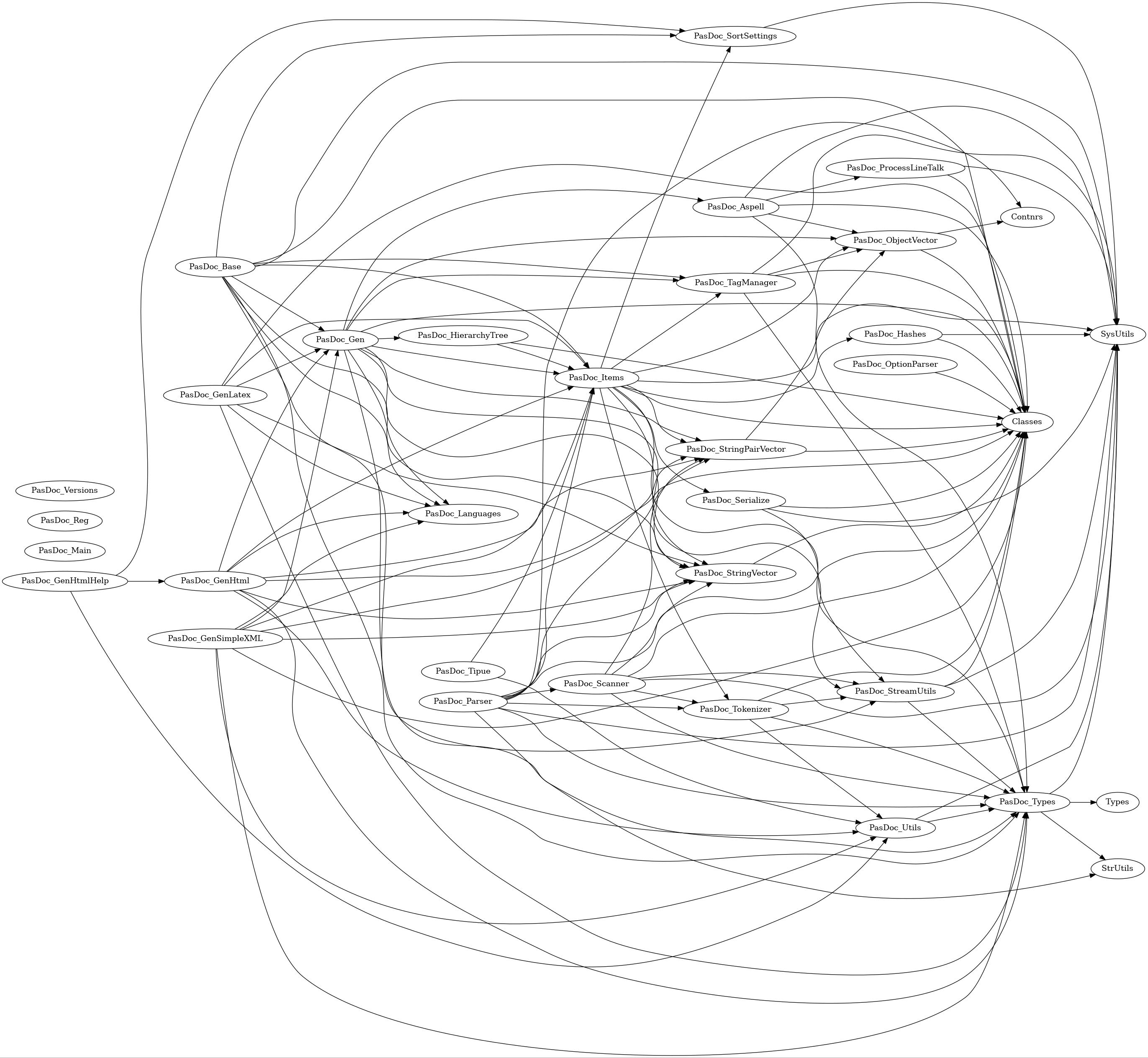
- SysUtils
- StrUtils
- Types
- Classes
Overview
Classes, Interfaces, Objects and Records
| Name | Description |
|---|---|
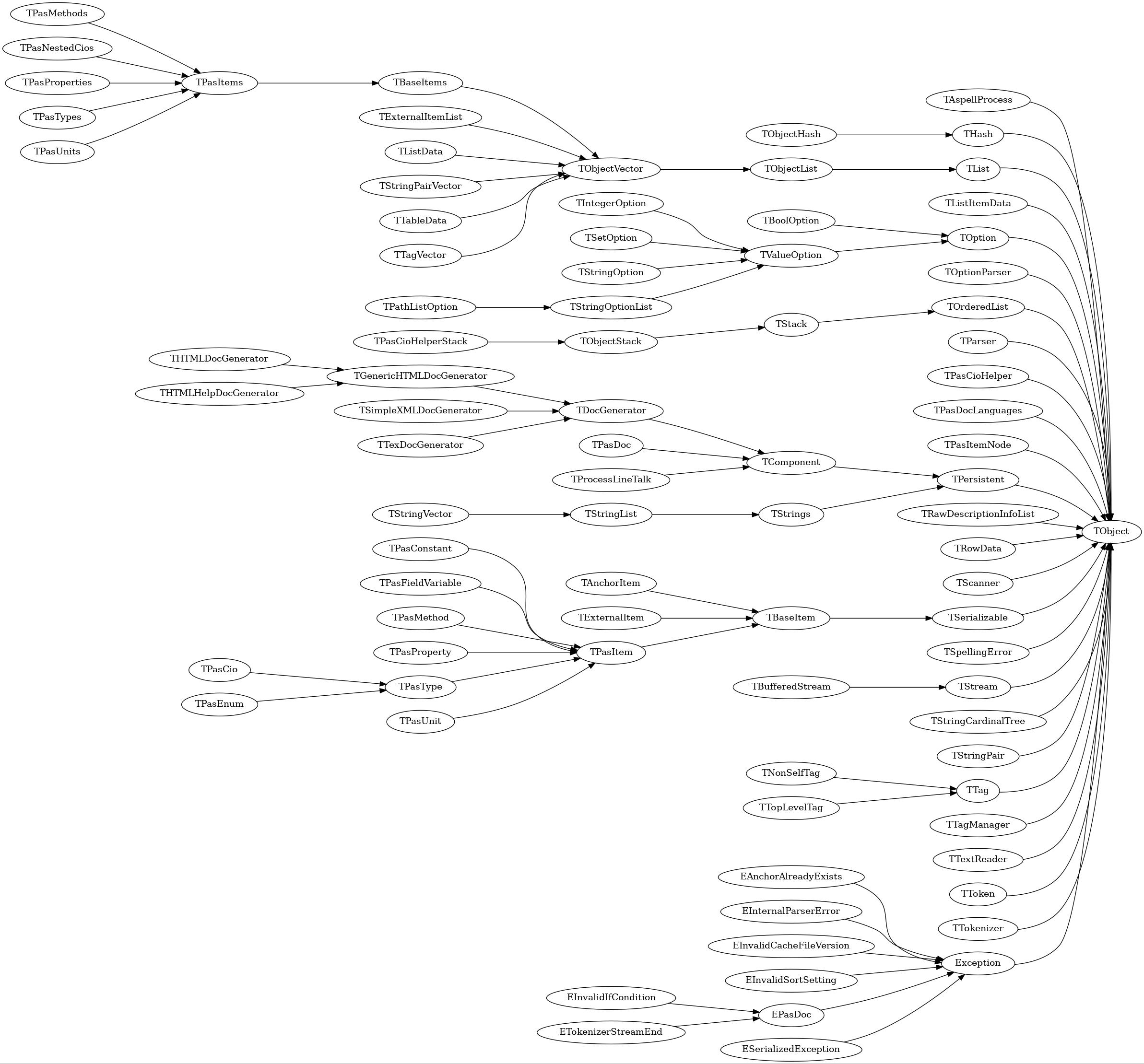
Class EPasDoc |
Exception raised in many situations when PasDoc encounters an error. |
Functions and Procedures
function SplitNameParts(S: string; out NameParts: TNameParts): Boolean; |
function StripNamePart(const NameParts: TNameParts): TNameParts; |
function IsValidMultipartName(S: string): boolean; |
function OneNamePart(const S: string): TNameParts; |
function GlueNameParts(const NameParts: TNameParts): string; |
function StringToImplicitVisibility(const S: String): TImplicitVisibility; |
Types
TBytes = array of Byte; |
UnicodeString = WideString; |
RawByteString = AnsiString; |
TStringArray = TStringDynArray; |
TNameParts = TStringArray; |
TPasDocMessageType = (...); |
TPasDocMessageEvent = procedure(const MessageType: TPasDocMessageType; const AMessage: string; const AVerbosity: Cardinal) of object; |
TCharSet = set of AnsiChar; |
TImplicitVisibility = (...); |
Description
Functions and Procedures
function SplitNameParts(S: string; out NameParts: TNameParts): Boolean; |
|
Splits S, which can be made of any number of parts, separated by dots (Delphi namespaces, like PasDoc.Output.HTML.TWriter.Write). If S is not a valid identifier, |
function StripNamePart(const NameParts: TNameParts): TNameParts; |
|
Strip one name part. Only call when we have at least 2 parts. |
function IsValidMultipartName(S: string): boolean; |
|
Checks that the string is a valid multipart identifier |
function OneNamePart(const S: string): TNameParts; |
|
Simply returns an array with Length = 1 and one item = S. TODO: This function, and all its usage, should be removed. Reason: all identifiers across Pascal code are potentially qualified. Using this function right now means e.g. that using ancestor names with qualified identifiers, like "TMyClass = class(OtherUnit.TAncestor)", is not resolved fully (they are not linked everywhere they should be). |
function GlueNameParts(const NameParts: TNameParts): string; |
|
Simply concatenates all NameParts with dot. |
function StringToImplicitVisibility(const S: String): TImplicitVisibility; |
|
This item has no description. |
Types
TBytes = array of Byte; |
|
This item has no description. |
UnicodeString = WideString; |
|
This item has no description. |
RawByteString = AnsiString; |
|
This item has no description. |
TStringArray = TStringDynArray; |
|
Dynamic array of String. |
TNameParts = TStringArray; |
|
Qualified name of a Pascal item. User supplies such name by separating each part with dot, e.g. 'UnitName.ClassName.MethodName', then SplitNameParts converts it to TNameParts like ['UnitName', 'ClassName', 'MethodName']. Note that in case of unit names with dots, the item on this list may also contain a dot inside, if it's determined to be a name of unit with dot. Like this: ['Unit.Name.With.Dot', 'ClassName', 'MethodName']. We have special code to do this in TDocGenerator.FindGlobal . The idea is that each string corresponds to some TBaseItem.Name. Use such list for searching routines, for TBaseItem.FindItem and friends. This must always have at least one part. There is no limit on the maximum length of TNameParts, since we can have arbitrary number of parts with nested classes, like "MyUnit.TMyClass.TMyNestedClass.TAnotherNestedClass.TOriginalType". |
TPasDocMessageType = (...); |
|
Message type to send with TPasDocMessageEvent. Values
|
TPasDocMessageEvent = procedure(const MessageType: TPasDocMessageType; const AMessage: string; const AVerbosity: Cardinal) of object; |
|
Callback to send a message from one class and react to it in another. |
TCharSet = set of AnsiChar; |
|
Set of AnsiChars. |
TImplicitVisibility = (...); |
|
See command-line option --implicit-visibility documentation at --implicit-visibility documentation. Values
|
Authors
Generated by PasDoc 1.0.2.